
Lee Pitcher, MP for Doncaster East & the Isle of Axholm
It’s the most frequently recorded natural disaster in the world, and has seen more than a doubling of events in Europe since 2004. Hazard a guess what that might be? Yes – Flooding!
In the same way that too little water at any one time can devastate large areas, too much water rips communities apart, causes significant environment damage and can leave physical and mental scars, that for some, never leave them. In fact, for someone who has experienced flooding, the sound of rain alone can trigger post traumatic stress disorder.
Some years ago, I worked on a project with the Rockefeller Foundation, ARUP, the University of Massachusetts, and other specialist partners where I learnt that, in many cases, the single biggest shock or stress that could impact a number of the Rockerfeller’s 100 Resilient Cities, was indeed, floods and/or drought.
Whilst there has been much going on to reduce the risk of flooding through interventions like flood defences, natural flood management and property level flood resilience, there is so much more that needs to be done, especially with the existential threat of the changing climate and the weather we see as a result.
It’s always surprised me that my children would come home from school, and work through a fire evacuation plan with my wife and I, but in some of our towns, cities and regions that have the some of the worse risks of flooding in the world, children do not learn about creating a flood plan for their own home.
After all, we know that if you plan, you retain some control – even in the most traumatic and ambiguous situation of a flood event. It is that element of control, in knowing how to respond to and, subsequently bounce back from a flood (if the worse happens), that can help build your personal resilience.
So what can you do? FLOOD CPR…. It is three simple steps:
- Check – understand your flood risk – this website will help
- Prepare and Plan – be ready by building a personal flood plan for your property
- Register – so you get alerts of potential flood risk
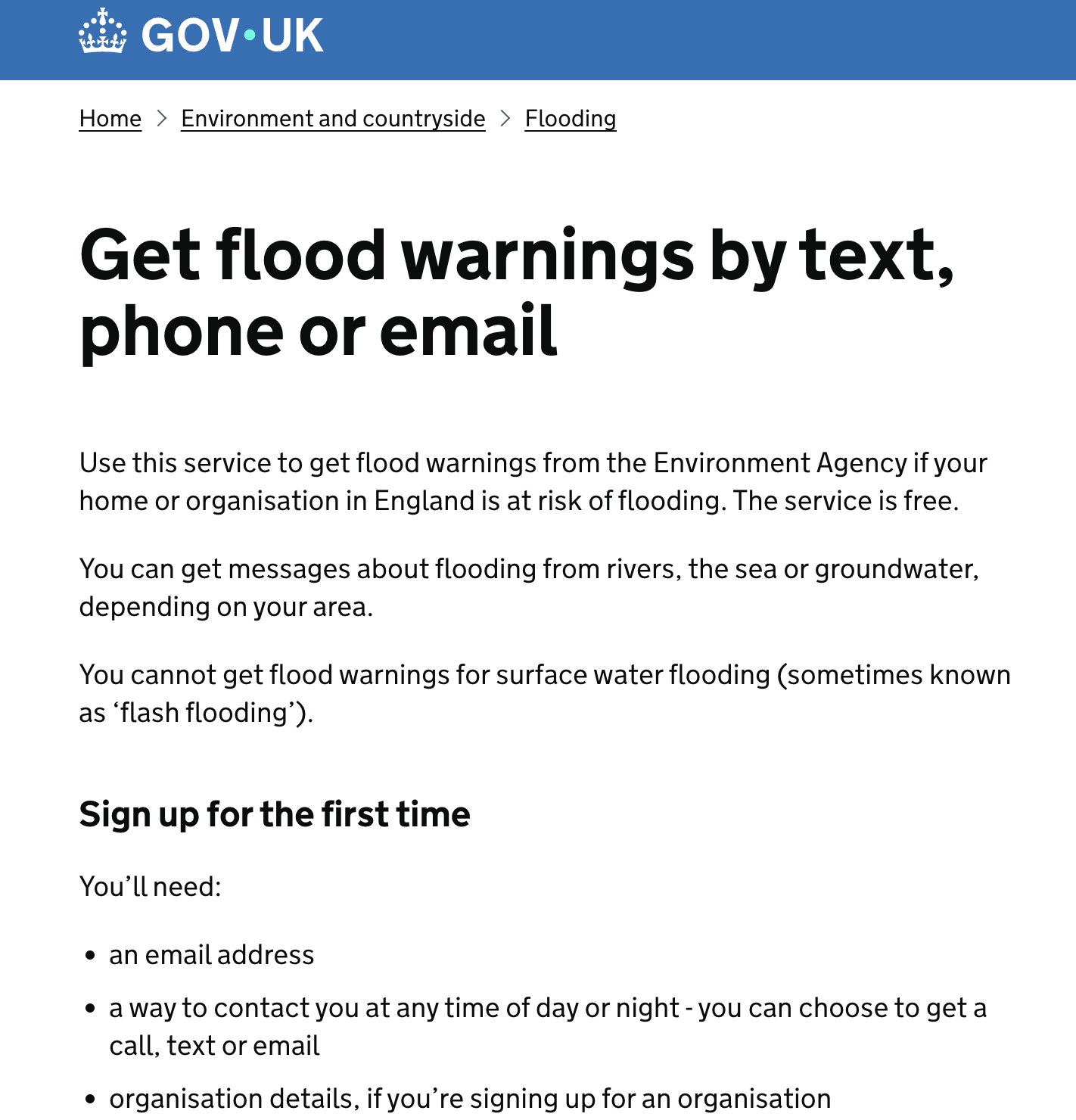
Right now, the very first thing that every MP could do is register for the Environment Agency’s Flood Risk Alerts. As can our Councillors at every tier of local government, as well as those of you with a presence in your community. Once you’ve role modelled that, you can share that with your constituents. You can get alerts via phone, email or text message here.
On many occasions, the warning of a potential flood can provide precious time to plan and prepare for what might be coming.
To understand how you plan and prepare by creating your own flood plan, please take a quick look at the Living with Water website here which can step you through what to do:
Plan & prepare | Living With Water
It is just a starter for ten, I hope you’ve found it useful and timely. As we enter the named storm season we can all help our communities be as prepared as possible.
Leave a Reply