
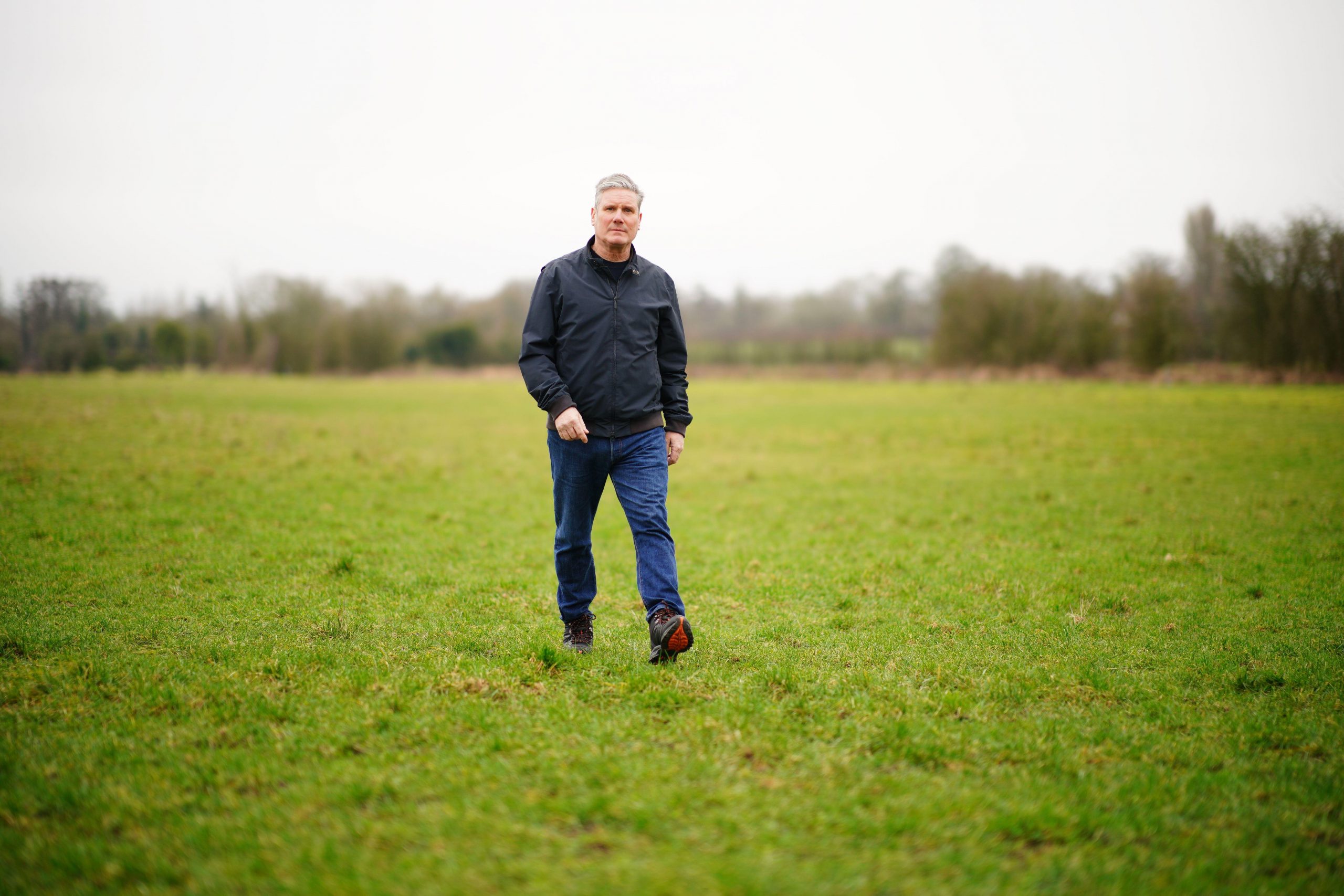
Neil Ward, Labour:Coast&Country Steering Group
The 2024 General Election proved (again) that Labour could win previously safe Tory seats in rural areas. Labour hold almost 50 of the most rural constituencies and almost twice as many County Constituencies (those containing some rural territory) as the Tories. Capturing so many rural seats shows how Labour can represent all types of localities and undermines the stereotype of the Party as exclusively urban.
As in 1997, the early push-back against a Labour Government contains claims of rural discontent or attacks on traditional ways of life. The New Labour years saw marches in support of hunting. This time, Inheritance Tax and green energy infrastructure are more likely to be the catalyst. It’s timely to consider New Labour’s approach to rural areas and ask what can be learned from its experience and applied today?
New Labour’s manifesto had very little to say about rural areas, but in Government Labour soon got drawn into rural policy reform. Why was this so? The Ministry of Agriculture, Fisheries and Food (MAFF) was seen as a failing department in need of reform after the BSE scandal. A farm incomes crisis led to repeated calls on the Treasury for emergency bailouts. The creation of the Regional Development Agencies (RDAs) triggered institutional changes to rural quangos. And the election of a larger than expected cohort of rural Labour MPs raised questions about how New Labour’s modernising vision might apply in rural contexts. In 1998 Tony Blair picked rural policy as one of the five thorny issues to be reviewed by his new Performance and Innovation Unit in the Cabinet Office. A bold and ambitious Rural White Paper was produced in late 2000 which was warmly received by rural organisations.
Its vision was joined up, place-based and about much more than agriculture.
It included a progressive approach to greening the Common Agricultural Policy, where the UK led the way in Europe for some years. A New Deal for Market Towns helped raised their profile in regional economic policy, and there were commitments on rural services. The Rural Group of Labour MPs was poised to promote the White Paper’s vision
Unfortunately, momentum stalled in early 2001 with the arrival of the worst Foot and Mouth Disease (FMD) outbreak in history. Despite the economic impacts being felt even more extensively in the wider rural economy, the response to FMD centred on the economic viability of livestock farming. In an accident of history, Margaret Beckett insisted climate change responsibilities be wrapped up with the new Department of Rural Affairs that had been proposed in the 2001 election manifesto.
The resulting new Department for Environment, Food and Rural Affairs (Defra) had the perverse effect of marginalising rural development in favour of environmental sustainability and agricultural competitiveness, such that Blair’s rural reform agenda embodied in the Rural White Paper lost its way.
By 2003, Gordon Brown wanted to streamline the quangocracy. The Haskins Review dismantled the Countryside Agency and transferred rural programs to RDAs. Defra’s rural policy atrophied, with dwindling budgets and a loss of strategic vision. The Rural Payments Agency debacle of 2006 — a failed IT system for farm subsidies — seemed to symbolise the pitfalls of Blairite managerialism.
There are lessons from the New Labour years. First, the Labour Party has a strong history of progressive rural reform that gets too easily forgotten. Labour’s 1947 Agriculture Act underpinned the massive post-war expansion of UK agricultural production. Our treasured system of National Parks was a Labour reform. New Labour injected ambition and imagination into rural policy reform, at least in its early years, that showed that the Party can take on and address some difficult challenges facing rural areas.
Second, it is unwise to view rural issues through an agricultural lens alone. While farming may strongly influence the look of the rural landscape, it employs an ever-diminishing proportion of the rural workforce. The strong common interests between farming, tourism and conservation mean a Labour vision needs to support farming’s role in the wider rural fabric as well as in delivering national priorities around nature, climate and food security. Yet those suffering from poor housing, training, or services in rural areas do not have the advantage of a strong representative lobbying organisation behind them. It takes more effort to hear their voices.
Third, rural MPs can be an important voice in shaping the Party’s thinking about its vision and approach to national renewal, and a useful counterbalance to overly urban and metropolitan thinking. For Labour can only win and retain power if its programme can strike a chord with people beyond the larger towns and cities too; they are where Labour’s majorities (circa 1945, 1997, 2024) are to be found.
Leave a Reply